
Views: 0 Author: Site Editor Publish Time: 2026-07-22 Origin: Site


Commercial real estate costs continue to climb steadily, forcing facility managers to rethink their spatial strategies. Facility expansion often requires massive capital outlays, making it necessary to maximize your existing square footage instead. Static storage creates significant operational friction on the warehouse floor. It wastes valuable aisle space and creates hard capacity ceilings that limit growth. Disorganized inventory slows down retrieval times and frustrates staff during peak operational hours. Procuring the wrong high-density setup introduces serious structural risks to your building. Floor loading failures can compromise building integrity, while workflow bottlenecks delay critical daily operations. Non-compliance with local fire codes leads to severe penalties and safety hazards. You need a systematic evaluation framework to navigate these challenges. Transitioning from static units to a mobile shelving system requires careful planning and engineering oversight. We will focus on load requirements, drive mechanisms, and structural prerequisites to ensure a successful deployment.
Transitioning to a high-density shelving system typically reclaims 50% of storage footprint or doubles capacity within the same footprint, but requires strict floor load-bearing assessments.
System selection must align with pick frequency: high-throughput environments require powered or mechanical-assist drives, while archival storage can operate efficiently on manual systems.
Safety and compliance (ADA, local fire codes, seismic zones) are non-negotiable evaluation criteria that dictate track installation and system height.
Partnering with manufacturers offering OEM mobile shelving ensures component compatibility and long-term parts availability for custom or heavy-duty applications.
Static shelving outperforms mobile systems in specific, high-velocity scenarios. High-speed environments demand immediate, simultaneous access to multiple SKUs. Simultaneous multi-user picking requires open aisles at all times to prevent worker collision and wait times. Fast-moving inventory needs constant, unrestricted availability to meet tight shipping deadlines. Mobile systems excel under different operational conditions where space density outweighs split-second access. Batch picking operations benefit from compressed storage layouts that reduce overall travel time across the facility. Long-term retention facilities maximize their footprint by eliminating dead aisle space entirely. High-SKU, low-velocity inventory fits perfectly on movable carriages, keeping items organized without eating up active floor space. You face a core operational trade-off when designing your layout. Static systems offer speed of access and low initial capital requirements, but they consume massive amounts of real estate. Mobile systems deliver maximum space density and superior long-term space utilization, allowing you to store more goods in a smaller footprint.
Calculating current storage density requires a simple formula based on your physical dimensions. Divide your total stored volume by the square footage consumed by the racks and aisles. This establishes your baseline metric for current efficiency. Projecting real estate savings justifies the equipment investment to stakeholders. Calculate the cost per square foot of your facility, factoring in utilities and maintenance. Multiply this by the square footage reclaimed by the new system to see your direct spatial savings. Avoided footprint expansion keeps capital free for other critical infrastructure projects. Delayed facility construction preserves your operational budget and prevents massive disruptions. High-density storage transforms wasted air space into usable capacity, fundamentally changing how you manage inventory.
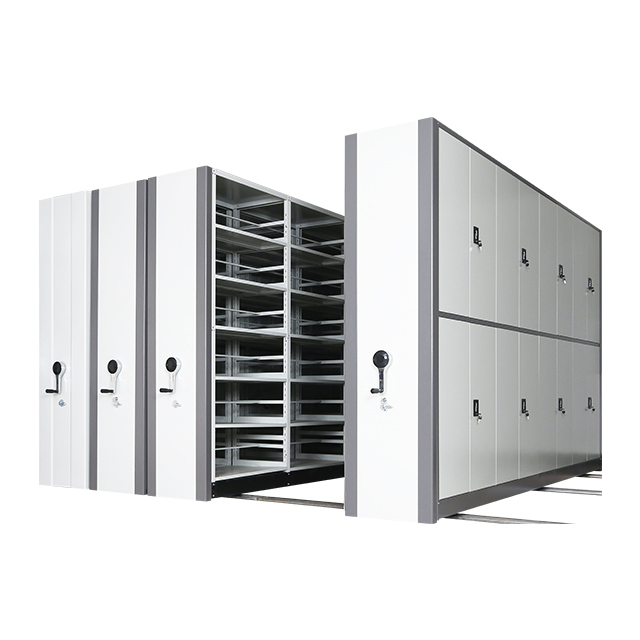
Corporate offices frequently utilize standard systems to manage extensive paper records and supplies. Healthcare facilities store essential medical supplies efficiently, keeping sterile items organized and accessible. Retail backrooms organize seasonal inventory on these units, rotating stock as floor displays change. Light industrial storage areas benefit from compressed footprints, allowing more room for active assembly lines. A standard high-density shelving system has specific limitations you must engineer around. Weight capacity per carriage dictates what you can store, usually capping out at medium loads. Maximum carriage lengths restrict aisle dimensions, preventing overly long runs that strain manual drives. Track configurations must match your existing floor plan, often requiring surface-mounted rails to avoid concrete cutting.
Industrial warehousing demands robust storage solutions capable of handling extreme weights. Manufacturing facilities store heavy parts, raw materials, and components on reinforced decks. Heavy machinery tooling requires specialized shelving that won't buckle under concentrated point loads. Military equipment storage relies on maximum structural integrity to secure heavy gear and weapons. Technical differentiators set a heavy-duty mobile storage rack apart from standard office units. Welded steel carriages handle massive payloads without deflecting or binding on the tracks. Heavy-duty rail systems prevent track deformation under the constant stress of rolling steel wheels. Integration with pallet racking maximizes vertical space, allowing forklifts to load the upper tiers. High-capacity electric drives move tons of material effortlessly, protecting workers from strain injuries.
Libraries manage growing collections with specialized shelving designed for books and media. Museums protect artifacts using controlled storage environments that prevent degradation. Government entities retain decades of official records securely, meeting strict legal mandates. Legal and medical facilities manage strict retention schedules, requiring organized, high-capacity files. mobile shelving for archives includes unique technical differentiators tailored to preservation. Environmental controls maintain proper ventilation gaps, ensuring air circulation even when aisles are closed. Automatic spacing prevents mold growth on sensitive documents by allowing HVAC systems to penetrate the storage block. Vibration-dampening tracks protect fragile historical media from jarring movements during carriage operation. Specialized media dividers keep loose items organized, preventing them from shifting and sustaining damage.
Retrofitting existing spaces often involves strict floor modification limits imposed by landlords. Historical buildings prohibit drilling into original foundations or altering the structural slab. Lighter load requirements do not need heavy trenching, making invasive installations unnecessary. Low-profile systems offer modular flooring integration that sits directly on top of the existing surface. They eliminate the need for messy concrete trenching, saving time and reducing dust contamination. Zero trip hazards improve workplace safety, as the modular floor creates a flush surface with the rails. You can relocate the system easily if your facility moves, unbolting the tracks and taking the entire setup to a new building.
System Type | Best Use Case | Key Feature | Load Capacity |
|---|---|---|---|
Standard High-Density | Offices, Retail, Light Industrial | Configurable tracks | Medium |
Heavy-Duty Racks | Warehousing, Manufacturing | Welded steel carriages | Very High |
Archive Shelving | Libraries, Museums, Records | Vibration dampening | Medium-High |
Rail-Less/Low-Profile | Leased Spaces, Historical Buildings | Modular flooring | Light-Medium |
Manual systems provide a cost-effective solution for basic storage needs. They suit small systems with low carriage weight, where physical effort remains minimal. Infrequent access areas function perfectly with manual handles, as speed is not a primary concern. Mechanical assist drives use ergonomic gearing ratios to multiply human force. One pound of effort moves thousands of pounds, making it easy for any staff member to operate. They are ideal for mobile compactor storage racks in mid-to-high use areas where manual pushing would cause fatigue. Powered electric systems offer push-button operation for maximum convenience and speed. LCD touchscreens and software control manage complex arrays, allowing for automated aisle creation. Heavy-duty loads require electric motors to overcome the massive inertia of fully loaded carriages. High-frequency access demands automated movement to keep workflow moving without physical strain. Remote system management improves overall efficiency, allowing managers to monitor usage and lock down specific aisles.
Industrial steel provides maximum strength for demanding warehouse applications. It handles heavy-duty load capacities reliably, resisting bending and warping under stress. Standard warehouse environments rely on steel construction for its durability and impact resistance. Wire shelving options suit healthcare facilities perfectly, offering clean lines and easy maintenance. Sterile environments require high visibility and air circulation to meet strict hygiene standards. Wire decks minimize dust accumulation on stored goods, reducing the need for constant cleaning. High-Density Poly-Ethylene (HDPE) resists moisture effectively, preventing rust in damp areas. Coated materials withstand cold storage and walk-in freezers, where standard paint would flake and fail. High-humidity archives need rust-resistant components to protect the integrity of the shelving structure. Corrosive chemical storage requires specialized protective coatings to prevent rapid degradation of the metal.
Static load ratings define resting weight limits when the carriages are stationary. Dynamic load ratings measure weight during carriage movement, accounting for momentum and friction. Both influence the structural integrity of your system and dictate the required rail foundation. Carriage deflection limits prevent the base from bowing under heavy center loads. Rigid, non-flexing steel construction is absolutely critical for long-term reliability. It prevents rail binding under uneven loads, ensuring the wheels track perfectly straight. Smooth operation requires a perfectly rigid carriage chassis that transfers weight evenly to the floor.
Active and passive safety features protect your staff from crushing hazards. Photo-sweep sensors stop movement immediately if an object or person is detected in the closing aisle. Aisle-entry infrared sensors monitor user presence, preventing the system from moving while someone is inside. Mechanical aisle locks prevent accidental carriage movement, requiring a physical release before operation. Zero-force infrared sensor grids offer comprehensive protection, blanketing the entire aisle in a safety net. Compliance requirements dictate system design and installation parameters. ADA accessibility requires specific ramp slopes to allow wheelchair access without steep inclines. Rail flushness prevents wheelchair obstruction and eliminates tripping hazards for walking staff. Minimum aisle widths ensure safe navigation and adequate turnaround space. NFPA fire codes mandate sprinkler clearance, requiring a specific distance between the top shelf and the ceiling. Automatic fire-override integration opens aisles during emergencies, allowing water to reach the floor. Seismic anti-tip track designs prevent collapse during earthquakes, locking the carriages to the rails.
Off-the-shelf systems offer faster lead times for urgent projects. They generally carry a lower initial hardware cost due to mass production efficiencies. Standard dimensions work well for typical storage needs, fitting standard boxes and binders perfectly. Partnering with a manufacturer for OEM mobile shelving provides tailored solutions for complex spaces. You can specify exact carriage dimensions to maximize every inch of available room. Customized deck heights accommodate unique inventory sizes, eliminating wasted vertical space between shelves. Specialized storage accessories improve organization, holding specific tools or media securely. OEM compatibility guarantees seamless integration with existing static shelving units, allowing you to reuse old equipment. Reading manufacturer specification sheets requires attention to detail to ensure structural limits are met. Verify carriage run lengths and modular expansion capabilities before committing to a layout. Check the weight limits per linear foot carefully to avoid overloading the chassis.
Inadequate concrete slab capacity causes catastrophic failures that can condemn a building. Uneven subfloors strain drive mechanisms prematurely, leading to burned-out motors and broken chains. Professional structural engineering audits are mandatory before installing any high-density system. You must verify pounds per square foot (PSF) limits before installation begins. Rail leveling techniques correct uneven floors, creating a perfectly flat track for the carriages. Grout provides a solid, permanent base for rails, filling voids and transferring weight to the slab. Steel shims offer precise elevation adjustments during the initial track layout. Proper leveling ensures smooth carriage movement and prevents the system from drifting. It prevents motor strain on powered units and reduces wear on the wheel bearings.
Phased installation strategies maintain partial operational capacity while the build occurs. You do not have to shut down completely if you plan the zones correctly. Plan the logistics of inventory offloading carefully to avoid losing track of critical items. Establish secure temporary storage areas for displaced items, using temporary racks or pallets. Develop efficient reloading schemes to populate the new system logically. Label everything clearly to speed up the reloading process and prevent misplacement. Coordinate with installation crews to minimize daily disruptions, scheduling noisy work during off-hours.
Preventative maintenance routines extend system lifespan and prevent costly breakdowns. Track debris cleaning prevents wheel damage and keeps the carriages rolling smoothly. Chain tensioning keeps mechanical assist drives smooth, eliminating slop in the hand crank. Drive belt replacement prevents unexpected downtime on powered units, swapping worn parts before they snap. Sensor calibration ensures safety mechanisms function correctly, protecting your staff from accidents. Select vendors with robust service level agreements (SLAs) that guarantee rapid response times. Reliable access to replacement parts keeps your system operational for decades. Regular inspections catch minor issues before they escalate into major mechanical failures.
The right mobile shelving system balances load capacity, user safety, and pick frequency against structural facility constraints. You must align your storage goals with the physical realities of your building and the daily workflow of your staff. Shortlisting the right system follows a clear logic based on your specific inventory. High-weight, industrial, or palletized goods require heavy-duty mobile storage racks built for abuse. Secure, sensitive document retention needs mechanical assist or electrical archive shelving with environmental controls. Leased spaces or historical buildings demand rail-less mobile storage to protect the existing floors.
Initiate a professional site audit to assess your current storage footprint and identify structural limitations.
Request a spatial analysis CAD drawing to visualize the proposed system layout and confirm aisle clearances.
Consult a structural engineer to verify your concrete slab load limits before purchasing heavy-duty equipment.
Evaluate your inventory pick frequency to determine the appropriate drive mechanism for your daily operations.
A: A high-density system eliminates fixed aisles. It uses carriages mounted on rails to compress the storage footprint. You open an aisle only where you need access, doubling capacity in the same space.
A: Standard commercial systems typically hold 700 to 1,000 lbs per linear foot. Heavy-duty industrial systems feature reinforced steel carriages capable of supporting up to 30,000 lbs or more per carriage.
A: Heavy-duty systems often require concrete anchoring or rail trenching. However, low-profile and modular floor systems can be installed directly on top of existing floors without causing permanent damage.
A: Yes. Archive systems utilize smooth-stopping mechanisms, vibration reduction tracks, specialized ventilation gaps, and automated environmental fire links to preserve and protect sensitive historical materials.
A: Many systems allow your existing static shelving units to be mounted directly onto new mobile carriages. This reduces overall project costs, especially when utilizing compatible OEM components.
A: ADA compliance requires flush rail installations to prevent tripping. It also mandates specific ramp gradients and minimum aisle widths to ensure full wheelchair accessibility and safe navigation.
A: Yes. Selecting materials like stainless steel, wire shelving, or High-Density Poly-Ethylene (HDPE) allows these systems to operate efficiently in sub-zero temperatures and maintain sterile cleanroom conditions.


